
Crossing Switzerland 2026: 400km Across the Alps: From Bad Ragaz to Montreux
Introduction: Five Runners, One Alpine Monster
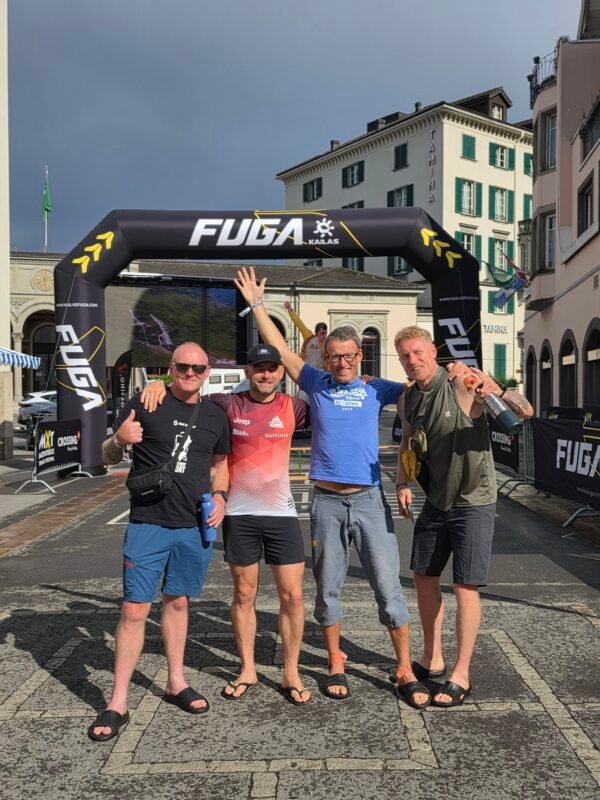
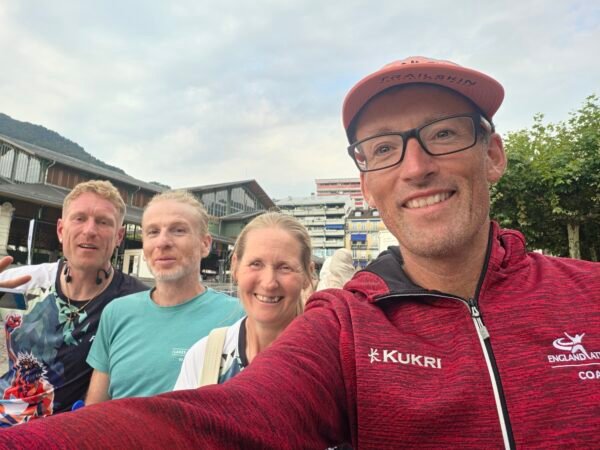
On Sunday 19th July 2026, five runners stood on the start line in Bad Ragaz, in the far east of Switzerland, looking ahead at one of the biggest challenges any of us had ever taken on.
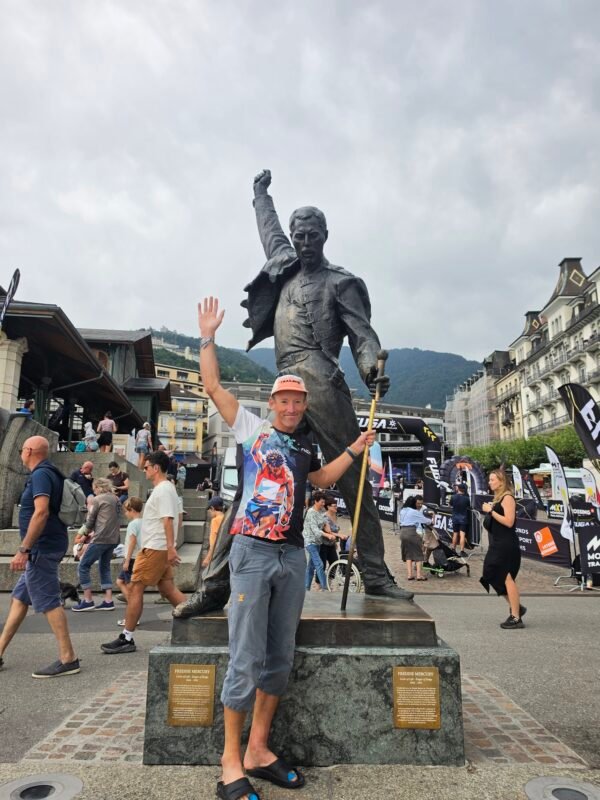
Ahead of us was Crossing Switzerland — a journey across the entire width of Switzerland, travelling from Heidiland in Bad Ragaz to Montreux, on the shores of Lake Geneva, finishing beside the famous Freddie Mercury statue.
The statistics alone were intimidating:
400km
Over 25,000 metres of elevation
Six days through the Swiss Alps
The route crossed some of the most spectacular and demanding terrain in Europe, following a line from the eastern Alps to the western edge of Switzerland.
Standing together at the start were:
- Myself
- Dave Gillen
- Dale Restorick
- Tim Wiggins
- Martin Wilson
We all arrived with different experiences and different reasons for being there.
Tim had already completed Swiss Peaks, so he knew the unique challenge of spending days crossing the Alps on foot.
Martin also had significant endurance experience and was ready for the challenge ahead.
Dave and Dale were stepping into a completely different world. Dale had previously completed a 50km ultra at UTS, but nothing remotely close to the scale of what was waiting for us.
That was one of the fascinating things about these races.
At the start line everyone looks the same.
Everyone is excited.
Everyone believes they are ready.
But over 400km through the Alps, the mountains gradually reveal what you are truly capable of.
Having completed Swiss Peaks 360 previously (380km after route changes), I knew exactly how brutal a Swiss alpine ultra could be.
Crossing Switzerland was another huge adventure.
Not easier.
Not harder.
Just different.
Both races were absolutely brutal in their own way.
Before we started, the race organisers gave us one important instruction:
Follow the Via Alpina signs.
The majority of the route followed Switzerland’s famous long-distance Via Alpina trail. For sections where the race left the official Via Alpina route, flags had been placed to guide runners in the correct direction.
It was a simple navigation system for a very complicated journey.
The goal was simple:
Reach Montreux.
Everything between Bad Ragaz and Lake Geneva would have to be earned.
Chapter 1: The Start – Bad Ragaz to Rüti
A Brutal Introduction
The adventure almost went wrong before it even began.
My journey into Switzerland started with a dramatic flight into Geneva.
A huge thunderstorm was hitting the region, creating chaos across the airport. Many flights were cancelled or diverted, but somehow ours managed to weave its way through the storm and land safely.
I felt incredibly lucky just to arrive.
After travelling onwards to Bad Ragaz, the night before the race did not produce the ideal sleep.
I started Crossing Switzerland tired.
However, compared with Swiss Peaks, I did feel slightly fresher.
That was important because I knew one of the biggest battles over the coming days would not simply be the climbing or the distance.
It would be sleep.
The race started and immediately reminded us what type of adventure we had signed up for.
The route headed through the spectacular Tamina Gorge, before climbing relentlessly towards Pizolhütte.
There was no gentle introduction.
The opening climb gained around 1,800 metres, and conditions made things even harder.
Heavy rain arrived, turning sections of trail into slippery, technical descents.
On one of the early descents, I caught my foot and fell, cutting open my knee.
Thankfully, it was not serious, but it was not the ideal start.
The mountains had already delivered their first warning.
Pay attention.
The first section was huge:
78.5km
5,357m of ascent
before reaching Life Base 1 at Rüti.
Arriving there, my plan was simple:
Sleep.
After Swiss Peaks, I had learned that sleep deprivation could become as dangerous as physical fatigue.
I wanted to be smarter this time.
Unfortunately, my body had different ideas.
Despite being exhausted, I struggled again in the large dormitory.
The problem was familiar:
People arriving.
People leaving.
People talking.
People moving around.
My brain refused to switch off.
The frustrating thing was that during both Swiss Peaks and Crossing Switzerland, my best sleep always came in very specific circumstances:
A quiet room.
Only one other person.
No snoring.
No talking.
No constant movement.
At Rüti, that was not the situation.
By this point, Tim Wiggins and Martin Wilson had moved ahead after I stopped longer at an aid station to get food.
I ended up spending much of this first section with Alex Lunghi.
Alex made a decision that, looking back, was probably the right one.
Instead of staying at Rüti, he continued onwards to Klausen, where proper beds were available.
I attempted to rest.
Three hours passed.
Very little sleep happened.
Eventually, I accepted that lying there was no longer helping.
Even if I could not sleep, moving was better than wasting more time.
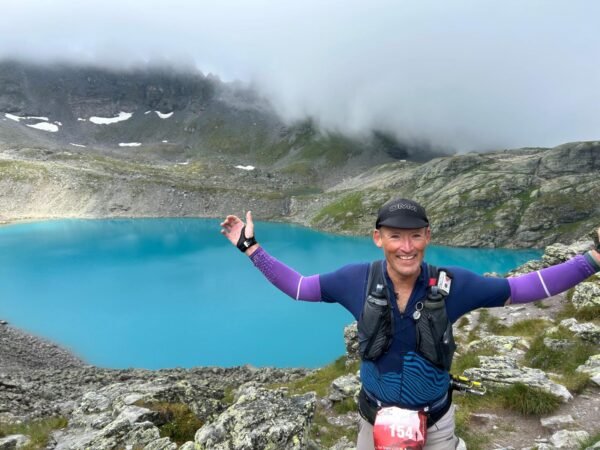
So, in the middle of the night, I headed back into the darkness.
Chapter 2: Rüti to Altdorf
The First Battle With Sleep
The route towards Klausen was much tougher than expected.
The trail climbed through endless forest switchbacks.
It was dark.
I was exhausted.
And I was alone.
At some point, I decided to put some music on.
Completely randomly, Lenny Kravitz – “It Ain’t Over ’Til It’s Over” started playing.
The timing felt perfect.
At around 4am, climbing through the darkness, already tired and questioning how long the journey would take, the message was exactly what I needed.
Keep going.
Even at this early stage, I had already started telling myself:
“By Friday this will be over, and you’ll be relaxing in a B&B in Montreux.”
That became the motivation.
Not the next checkpoint.
Not the next climb.
The finish.
Montreux.
Eventually, daylight arrived and I reached Klausen.
There I found Alex again.
The difference was obvious.
He had managed around four hours of proper sleep and looked full of energy.
I was still fighting the effects of another almost sleepless night.
Alex moved ahead again as we continued towards Life Base 2 at Altdorf.
Along this section I also bumped into Jonas Borgartz, who I had met during Swiss Peaks.
It was great seeing another familiar face from a previous Swiss adventure.
Jonas was with a friend, and we shared some conversation before continuing.
Unfortunately, this race would not end how he hoped.
He would eventually have to withdraw.
The route continued through the mountains towards Altdorf.
When I arrived, I tried again.
Another three-hour sleep attempt.
Another failure.
The body was exhausted.
The mind refused to cooperate.
By the time I had eaten and accepted that sleep was not happening, it was late afternoon.
Time to move again.
Chapter 3: Surenenpass, Engelberg and the Night Shift
Finding the Tribe
Leaving Altdorf after another failed sleep attempt, I headed back into the mountains.
The next section immediately involved another steep climb, this time winding through forest trails. The combination of tiredness and the relentless climbing was beginning to build, but gradually the trees opened up and the landscape became more alpine.
I climbed towards the snow line and into one of the most spectacular and remote-feeling areas of the race:
Surenenpass – 2,292m
This was one of those sections where the scale of the landscape reminded me why I kept coming back to these events.
The mountains felt enormous.
The terrain felt wild.
Wildlife was everywhere, with the area frequented by marmots and ibex.
It felt less like a race route and more like a journey through the heart of the Alps.
After refuelling at the small Blackenalp aid station, darkness began to arrive.
I switched on my headtorch and started the descent towards Engelberg.
As I left the aid station, one of the volunteers gave me some advice:
“The hard part is getting up and going again.”
She was absolutely right.
In these races, stopping is often harder than continuing.
Once your body settles, convincing yourself to put your pack back on and walk back into the mountains can be one of the biggest mental battles.
Arriving in Engelberg, I crossed paths with several runners who would become a huge part of my Crossing Switzerland experience.
There was:
- Sophie Littlefair
- Timm Dunker
- Joe Balcken
- Simon Wullimann
All of us had crossed paths earlier in the race, but from this point onwards we would spend significant time together.
There was also Marco Leuenberger, a Swiss runner who joined us for sections through the night.
When I arrived, Sophie was lying down on a tiny sofa.
She looked at me and said:
“There’s a sofa there that’s got your name written all over it.”
She was not wrong.
I lay down for around twenty minutes to recharge before getting up and refuelling.
Sophie, Timm, Joe and Simon were still there, and we all decided to head out together into the night towards Melchsee-Frutt.
After days of exhaustion, limited sleep and some questionable aid station food combinations, this group became one of the best parts of the race.
Shared suffering creates friendships very quickly.
The first part of the night involved more steep switchback forest climbs.
Sophie and Timm moved ahead with Joe and Simon, while Marco and I stayed slightly behind.
Near the top of the first climb, we caught Joe and Simon again.
However, Simon was really struggling with stomach issues.
There was an indoor area at the top of the climb, so Joe and Simon decided to stop and rest there until Simon felt able to continue.
Unfortunately, despite battling on for some time afterwards, his stomach problems would eventually force him to withdraw from the race.
The second climb continued upwards.
The gradient eased slightly, but my biggest challenge was no longer just the terrain.
It was sleep deprivation.
At this point my tiredness had reached another level.
My brain was starting to play tricks.
As I climbed through the darkness, I began hallucinating.
I saw Crossing Switzerland sew-on badges scattered across the trail.
They looked completely real.
I actually stopped and tried to pick one up.
Instead, I was holding stones.
That was probably the clearest sign yet that my body desperately needed rest.
I found a flat piece of rock and told Marco I needed a power nap.
I lay down for around five minutes.
At over 2,000 metres, around 4am, it was far too cold to stay still for long.
But even that short break seemed to help.
The descent towards Melchsee-Frutt was one of the hardest sections mentally.
I was completely exhausted.
Every step felt slow.
The terrain was not necessarily the most difficult, but the lack of sleep made everything feel amplified.
Eventually, I arrived.
The aid station offered food, but after such a demanding night it was disappointing.
I had a small bowl of lentils with a tiny portion of processed sausage.
It was not enough fuel for what we were asking our bodies to do.
However, there were mattresses available.
Because it was early morning, around 5–6am, the dorm was relatively quiet.
I managed a short power nap of around thirty minutes.
It was not perfect.
But strangely, that short sleep was more beneficial than the previous occasions where I had spent three hours lying awake.
Sometimes in these races you learn to take whatever recovery you can get.
I bumped into Sophie and Timm again, and we decided to continue together for the next section.
The plan was to tackle the final climb and the long descent towards Meiringen Life Base.
Before leaving, we checked the tracker and saw that Joe and Simon had only just left the point where we had last seen them.
Again, it showed how quickly things changed.
One minute you are together.
The next, everyone is fighting their own battle.
The descent towards Meiringen reinforced something that would become a major theme of Crossing Switzerland:
The descents were brutal.
The climbing was physically demanding, but the descents punished tired legs, tired feet and tired minds.
Eventually, we made our way down towards Meiringen.
Chapter 4: Meiringen and the Jungfrau Region
A Glimpse of Normality
When I arrived at Meiringen, I went into the aid station.
However, I did not realise immediately that Sophie and Timm had gone outside to meet Timm’s girlfriend Fenna, who had arrived with some extra food.
The food inside the aid station was actually better than expected — I think it was meatballs — and after eating I decided to try another sleep attempt.
Once again, I aimed for around three hours.
Once again, it did not happen.
The daylight, noise and activity made sleeping almost impossible.
Instead, I decided to try something else.
A massage.
This was my first massage of the race.
I asked them to focus on the arch of my left foot, which had been a long-standing issue.
Thankfully, it helped a lot.
At this stage, any improvement was valuable.
Sophie and Timm, who had been sleeping outside near Fenna, left before me.
Shortly afterwards, Joe and Simon arrived.
Simon was still struggling and went to speak with the race team to see if there was anything they could do to help.
The next section led into the Jungfrau region, and suddenly the mountains became even more spectacular.
The scale increased dramatically.
The peaks became larger.
The valleys became deeper.
The scenery became more dramatic.
After the massage and finally having some decent food, I was feeling better.
For the first time in days, I was able to look around and properly appreciate where I was.
The route climbed towards Grosse Scheidegg – 1,962m.
Unfortunately, clouds blocked the famous views of the Eiger, Mönch and Jungfrau.
But the landscape was still incredible.
Following the Reichenbach River, the route passed the famous waterfall where Sherlock Holmes supposedly met his demise during his battle with Professor Moriarty.
It was another reminder that this race was about more than distance.
We were travelling through places full of history and character.
Eventually I arrived at the aid station just outside Grindelwald.
I had noodles and boiled eggs before Sophie called me over to Timm and Fenna’s van.
They offered me some chips.
Unfortunately, several days of sleep deprivation had clearly affected my brain.
I completely missed the chips and grabbed a handful of pasta instead, genuinely thinking it was the chips.
Everyone found it hilarious.
In normal circumstances it would have been nothing.
After days of exhaustion, strange food combinations and mountain suffering, it was one of the funniest moments of the race.
The pasta, chips, coffee and a non-alcoholic beer that Fenna kindly gave me were probably the best refuelling I had received so far.
Small comforts make a huge difference during these adventures.
Chapter 5: The Heart of the Alps
Grindelwald, Kleine Scheidegg, Lauterbrunnen and Hohtürli
At 205.7km into the race, the three of us — myself, Sophie and Timm — left Grindelwald at around 6:30pm.
We knew we were heading into another night section, with the next major stop being Lauterbrunnen.
By this stage of the race, the pattern had become familiar:
Climb.
Descend.
Eat.
Try to sleep.
Fail.
Repeat.
But despite the fatigue, there was something special about moving through this part of Switzerland.
The Jungfrau region is one of the most iconic mountain landscapes in the world.
Even when exhausted, it was impossible not to appreciate where we were.
As daylight faded, we climbed towards one of the most famous locations on the entire route:
Kleine Scheidegg – 2,061m
This mountain pass is famous for its incredible views of the Eiger, Mönch and Jungfrau, and is one of the most photographed areas in the Alps.
Unfortunately, when we arrived, it was completely dark.
However, that actually created one of the funniest moments of the race.
Standing there in the darkness, we enthusiastically admired the spectacular views of the Eiger, Mönch and Jungfrau that none of us could actually see.
The conversation quickly moved towards whether “Melchsee Fruit” existed in Swiss supermarkets and what strange food combinations we might encounter at the next aid station.
After several days of sleep deprivation, exhaustion and questionable nutritional choices, it was genuinely hilarious.
Sometimes these moments are what make these races memorable.
Not just the climbs or the distance.
The random conversations at ridiculous times in ridiculous places.
The night section from Kleine Scheidegg towards Lauterbrunnen was actually one of the highlights of the race.
The terrain was steep but largely non-technical, and travelling with company made a huge difference.
Sophie, Timm and I laughed our way through the darkness as we descended towards Lauterbrunnen.
Eventually, we teamed up with Buquin Xu, another runner who would become a huge part of my experience over the following stages.
Arriving tired in the night, we were greeted enthusiastically by one of the volunteers, who I recognised from the start in Bad Ragaz.
The aid station was excellent.
There was proper food, including curried chicken, as well as massage and podiatry support.
After days of battling fatigue, having these small comforts felt incredible.
Sophie and Timm decided to shower and sleep.
I decided to shower, get a massage and then try to sleep.
There was a large hall with runners resting, but while looking around I noticed Timm sleeping on a mat in one of the upper corridors.
It was quieter.
That immediately caught my attention.
I decided to sleep there as well.
I lay down for three hours and probably managed around two hours of actual sleep.
It was the best sleep I had during the entire event.
And it was no coincidence.
The location was quieter.
There were only a couple of people nearby.
Nobody was snoring.
Nobody was talking in their sleep.
Nobody was constantly getting up and disturbing everyone else.
After days of frustration, I finally found the conditions my body needed.
When I woke up, I felt noticeably different.
Not fresh.
This was still a 400km race.
But better.
I ate breakfast and prepared to leave.
I was ready before Sophie and Timm, as Timm decided to stay longer for a massage and to have his feet checked.
Leaving Lauterbrunnen that morning, I immediately felt stronger.
The reward was the scenery.
The clouds had cleared, revealing the incredible views of the Eiger, Mönch and Jungfrau.
The mountains that had been hidden from us the previous night now towered above the valley.
It was one of the most inspiring sections of the entire route.
The mountains gave me a huge mental boost.
I headed towards Bundalp, where I bumped into Jean-Marc Buchs.
Jean-Marc remembered me from Swiss Peaks, where we had finished around the same time.
It was great to see a familiar face from another huge Swiss adventure.
This section was probably the strongest I felt during Crossing Switzerland.
After days of struggling, suddenly things were clicking again.
I was running.
Actually running.
I was moving efficiently and overtaking runners who were now experiencing the fatigue and sleep deprivation that had affected me earlier.
The final part of this section involved a steep climb and descent over:
Sefinenfurgge – 2,611m the descent involving getting licked by an alpine goat who was obviously keen on the salty sweat as I stopped to take pictures. The first of two occasions this would happen with animals enroute.
Leaving Bundalp, the heat began to build.
Ahead was one of the biggest climbs of the entire race.
The climb to:
Hohtürli – 2,778m
The Roof of Crossing Switzerland
This was the highest point of the race.
The ascent was enormous.
The heat was intense.
The legs had already covered hundreds of kilometres.
But somehow, I still felt strong.
As I approached the summit, a hiker coming down looked at me and said:
“You’re almost at the top. But of course… I could be joking.”
It made me laugh.
After days of suffering, a bit of humour from someone on the trail was appreciated.
Eventually, I reached the top.
I had been moving for around three and a half days.
I was 268km into the race.
The amount of climbing already completed was huge.
Yet I still felt full of energy and enthusiasm.
It was one of those moments in an ultra where you think:
“Maybe I’ve turned a corner.”
Unfortunately, ultras have a habit of changing the story.
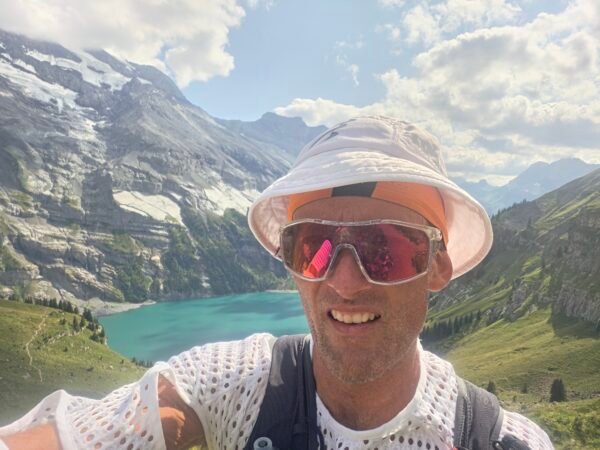
The descent from Hohtürli towards the spectacular Oeschinensee was where things began to change.
The scenery was incredible.
The glacial lake below looked exactly like the kind of place that makes people fall in love with the Alps.
But physically, something was happening.
I began to feel pain on the top of my left foot.
Initially, I was worried about my arch, which had been a long-standing issue.
But this felt different.
The extensor digitorum longus tendon became painful and inflamed.
At first, I hoped it would settle.
It didn’t.
The descent became increasingly difficult.
Technical terrain, tired legs and a painful foot were a bad combination.
By the time I reached Kandersteg, I knew this was something I would have to manage for the remainder of the race.
At Kandersteg, I saw Fenna, who was waiting for Timm and Sophie.
She told me I was around 6–7km ahead of them at that stage.
She also delivered some excellent news:
There were burgers at the aid station.
After everything we had eaten and endured, that sounded perfect.
I spoke with Jean-Marc and his support crew and ate the grilled burger steak.
It was exactly what I needed.
At around 6:30pm, I prepared to leave Kandersteg.
But now there was a new challenge.
The mountains were still ahead.
The distance was still huge.
But my left foot was becoming a serious problem.
I hoped the next aid station at Adelboden would provide treatment and perhaps another massage that could help.
It is amazing how quickly things can change in these races.
A few hours earlier, I had been feeling incredible.
I had climbed the highest point of the race, running strongly and overtaking people.
Now I was leaving Kandersteg wondering how I would survive the remaining kilometres with an injury that had appeared almost from nowhere.
That is ultrarunning.
The highs are unbelievably high.
The lows can arrive in seconds.
Chapter 6: The Darkest Battle
Kandersteg to Les Diablerets – Fighting Fatigue, Pain and the Night
Leaving Kandersteg, I knew the nature of the race had changed.
Up until this point, the main challenge had been the scale of the mountains and managing the sleep deprivation.
Now there was another factor.
My left foot.
The extensor digitorum longus tendon issue that had started on the descent from Hohtürli towards Oeschinensee was becoming increasingly noticeable.
The worry was not necessarily whether I could climb.
The climbs were still manageable.
It was the descents.
Every downhill step was a reminder that something was wrong.
The next section was the climb towards:
Bunderchrinde – 2,382m
The trail climbed steeply through endless switchbacks.
It felt like the path just kept winding upwards.
Jean-Marc and another runner gradually caught and passed me on the climb. They were moving steadily while I tried to manage my foot and conserve enough energy for what lay ahead.
As I approached the summit, daylight was fading.
I put my headtorch on.
Another night in the Alps was beginning.
Near the top, I bumped into an American hiker who was camping for the night while completing the Via Alpina.
We chatted briefly.
It was another reminder that this route was not just a race course.
It was a journey shared with hikers, runners and adventurers all travelling through the same mountains.
The descent from Bunderchrinde was difficult.
Very difficult.
It was steep, technical and covered in loose, rocky gravel.
With my left foot causing problems, I struggled to move naturally.
I stumbled my way down, trying to protect the painful area while still making progress.
The route wound through the darkness.
The only sounds were my own footsteps and the constant ringing of cowbells from the alpine pastures.
At this point, mentally, I was low.
I was exhausted.
My foot hurt.
And the aid station at Adelboden felt like it was taking forever to arrive.
Eventually, after what seemed like an endless descent, I reached it.
Adelboden was another interesting aid station experience.
There was one shower and one toilet.
This meant a constant flow of runners coming in and out — men and women sharing the same facilities.
At that stage, I was so exhausted that I barely cared.
I know for some other runners it was more of an issue, but my priority was simply survival.
I decided to try another massage.
However, I was so tired that I could barely stay awake on the massage table.
The masseuse eventually suggested trying again in the morning.
I went into the dorm area where there were beds available.
This was another chance to recover.
Surely this time I would sleep.
Unfortunately, once again, it did not work.
Despite being completely exhausted, my brain refused to switch off.
At one point I somehow ended up lying sideways, scrunched up, convinced I was lying on a tiny bed.
The ridiculous thing was that when I got in, I knew it was a normal-sized bed.
Sleep deprivation does strange things.
Eventually, I heard Sophie talking in her sleep.
That was how I realised she and Timm had arrived.
After around three hours of lying there without meaningful sleep, I gave up.
I got up.
I tried another massage on my foot.
But it was becoming clear that it was not going to magically fix the problem.
So around 4:30–5:00am, I headed back out onto the course.
I bumped into Jean-Marc again.
He had managed to sleep reasonably well and moved ahead.
I continued towards Bummerepass and then down towards Iffigenalp.
By now, fatigue was becoming overwhelming.
When I arrived at Iffigenalp, I was struggling.
There was a mattress outside a gazebo, away from the heat of the sun.
I lay down.
For around 30 minutes I rested there.
I did not really sleep, but once again it gave my body a chance to reset.
Then I heard familiar voices.
Sophie and Timm had arrived.
It immediately lifted my spirits.
They told me they genuinely thought they would not see me again after Adelboden.
Sometimes, in these races, seeing friends at exactly the right moment can completely change your mindset.
I set off with Sophie, Timm and Buquin Xu towards:
Schigelshafberg Pass – 2,380m
The conditions were brutal.
The sun was blazing.
The heat was intense.
There was no water source on the route.
And the accumulated fatigue from days in the mountains was catching up with me.
At one point, I simply could not continue.
I lay down and took several power naps while the others moved ahead.
It was frustrating.
Physically, I still wanted to move.
Mentally, I still wanted to finish.
But the combination of:
- severe sleep deprivation
- dehydration
- heat
- and the painful foot
was becoming overwhelming.
The descent into Gsteig felt endless.
The heat made every kilometre drag.
Eventually, exhausted and struggling, I reached the aid station.
Gsteig was supposed to be a self-service aid station.
Ironically, it became one of the best stops of the entire race.
A really friendly and enthusiastic volunteer was there preparing food and helping runners.
I sat outside in a chair and was surprised to find:
- Sophie
- Timm
- Fenna
- Buquin Xu
were all still there.
It was another boost.
Sophie and Fenna left earlier, but eventually I headed towards Les Diablerets Life Base with Buquin Xu.
As we travelled, we were rewarded with an incredible alpine sunset.
For a short time, everything felt perfect.
Then darkness arrived again.
The section into Les Diablerets became another mental battle.
With extreme sleep deprivation, I found myself climbing and descending endless forest switchbacks in the darkness.
The foot was painful.
The body was exhausted.
And I was alone again.
The distance seemed endless.
Every step required effort.
Eventually, I reached:
Les Diablerets Life Base
There was only one thing I wanted.
Sleep.
Unfortunately, the aid station was packed.
Completely packed.
There was barely any space.
No beds available.
The frustration was huge.
After everything we had already endured, finding somewhere to sleep felt like another battle.
Sophie had managed to get a bed.
I saw Timm, who had been to the podiatrist, and Buquin Xu.
Buquin was incredibly kind.
He spoke to one of the volunteers and explained that I was struggling badly with fatigue and asked if they could find somewhere for me to rest.
Before that happened, I managed to eat some raclette and sausage.
It was genuinely good food.
One of the better meals of the race.
But physically and mentally, I was finished.
I sat there with my head resting on my drop bag.
I barely had enough energy to open it.
At one point I considered taking my sleeping bag and mat outside and sleeping in the cold.
I even thought about leaving immediately and hoping the next aid station would have somewhere quieter to rest.
Thankfully, I resisted.
I needed sleep.
Buquin also kindly gave me some vitamin tablets and lozenges as I had developed a cough.
One frustrating aspect of the aid station was seeing runners arriving later getting beds while exhausted runners already there were still waiting.
A clearer system would definitely have helped.
Eventually, Timm suggested:
Even if beds were unavailable, could we use our own sleeping mats and sleep on the floor?
Thankfully, the volunteers agreed.
It was a huge relief.
I climbed straight into my sleeping bag without even changing clothes.
I slept for around three hours.
It still was not perfect.
The dorm was busy.
There was noise.
But it was sleep.
And at that stage, sleep was everything.
When I woke up, I ate more raclette and sausage, followed by pancakes with Nutella.
For food, Les Diablerets was definitely one of the better aid stations.
Unfortunately, the masseuse was not available.
However, the hut had become quieter.
Finally, I could access my drop bag, shower, change clothes and prepare to continue.
Before leaving, I noticed my watch battery was only at 10% despite being on charge.
I went back, sat in the aid station and topped it up.
I took the cable with me and finally headed out.
Unknown to me at the time, Les Diablerets would also be where Martin Wilson’s race would end.
I did not find out the full story until later in Montreux.
Earlier in the race, I had noticed Martin’s pace had slowed dramatically after his strong start, and Tim had eventually caught and passed him.
Martin had developed problems, including illness and an ankle injury.
On the forest switchbacks approaching Les Diablerets, he fell into a ditch and became stranded during the night.
He spent several hours in the cold before eventually being rescued and taken away on a stretcher.
He was treated at the local hospital, given crutches and underwent blood tests.
After returning to the UK, further treatment was needed, including intravenous antibiotics after being diagnosed with Campylobacter infection.
Hearing what had happened was a sobering reminder.
In a 400km alpine race, everyone is fighting their own battle.
You never truly know what someone else is going through.
Chapter 7: The Final Push
Les Diablerets to Montreux – The Longest Last Kilometres
Going into Friday, I was still severely sleep deprived.
The previous days had taken their toll.
Physically I was tired.
Mentally I was tired.
My left foot was painful.
But I was close.
The finish line in Montreux was somewhere ahead.
After my experience at Swiss Peaks, I had hoped the final day might bring some relief.
At Swiss Peaks, the final day had felt different.
There had still been plenty of climbing and it was still a huge challenge, but there had been kinder terrain and a fantastic sequence of aid stations — almost like the race was gradually allowing you to reach the finish.
I was hoping Crossing Switzerland might provide something similar.
Unfortunately, the Alps had other ideas.
Leaving Les Diablerets, the next stop was Le Sépey.
When I arrived, I made the decision to sleep.
There were mats behind a curtain, away from the main activity of the aid station.
I lay down for around 30 minutes.
Looking back, I should probably have stayed longer.
The conditions were quiet.
Much quieter than Les Diablerets.
If I had known beforehand how much better the sleeping conditions were, I would probably have planned differently:
Sleep at Le Sépey.
Skip the chaos of Les Diablerets.
But hindsight is always clearer.
Even that short rest helped slightly.
Eventually, I packed up and continued.
The next section involved the climb towards Luan.
Neither this section nor the previous one was necessarily the hardest terrain of the race.
But by this stage, the combination of:
- sleep deprivation
- my injured foot
- extreme heat
was slowing everything down.
At Luan, I stopped for food.
I had a tortilla and spoke with one of the volunteers.
I mentioned that my biggest concern was the descents.
He looked at me and said:
“I would be screaming about the final section if that was the case.”
He was not wrong.
He also spoke to another runner who was carrying an ice pack and described the final part as the:
“easy section to the finish.”
The runner replied:
“Easy? Easy for who?”
It made me laugh.
Because after hundreds of kilometres through the Alps, “easy” was definitely a relative term.
The next section was anything but easy.
It involved an incredibly steep, relentless climb through a Swiss forest that felt like a sauna.
The heat was intense.
There was little shade.
There was no water source.
The climb seemed endless.
Eventually, I reached the ridge.
Lake Geneva and Montreux were now visible in the distance.
The finish was close.
But close does not necessarily mean easy.
The terrain changed into a steep, technical descent through overgrown sections of trail.
The heat continued.
The fatigue continued.
Everything was catching up.
At one point, I was filming a video while licking sticky gels and salt residue from my hands and phone.
As I did so, a group of cows started charging towards me.
At the time it was slightly alarming.
Looking back, it was hilarious.
It will definitely be one of the more memorable moments in the vlog.
Eventually, I reached Col de Chaude.
By this stage, I had been alone for much of the day.
I was tired.
Hungry.
Thirsty.
I just wanted to sit down and consume something.
Thankfully, the volunteers were fantastic.
They told me something that surprised me:
A lot of runners had described the previous section as one of the hardest parts of the entire race.
Some people had arrived during the night completely exhausted and disoriented, struggling down the technical ridge.
It made me feel slightly better.
Sometimes when you are suffering alone, you assume everyone else is moving easily.
They are not.
Everyone is fighting.
I ate, drank and prepared for the final major climb.
Around 5pm, I left Col de Chaude.
The next objective:
Rochers-de-Naye
The final summit before Montreux.
The climb was still tough.
At this stage of a 400km race, nothing is easy.
But mentally, things were different.
The finish was no longer some distant idea.
It was real.
It was close.
When I reached Rochers-de-Naye, I was told:
“One final technical descent, then it gets easier.”
That sounded perfect.
Unfortunately, my foot had other ideas.
By this stage, my left foot was in a terrible state.
The laces were completely untied.
The swelling was so bad that I could barely bend it.
Every step was painful.
But mentally I was determined.
I knew I was going to finish.
On the final descent, I met two Austrian women walking with their dog.
We started chatting.
One of them told me about cycling across Patagonia.
They were friendly, enthusiastic and completely unaware of the internal battle happening inside me.
For a few minutes, it felt like a normal mountain day.
As they left, I thought:
“Just the final few kilometres down to Montreux. I’ll be fine.”
Then, as happens so often in ultras, everything changed.
The final descent entered the gorge.
The route wound through forest switchbacks.
Suddenly, the accumulated effects of everything hit me:
The sleep deprivation.
The dehydration.
The exhaustion.
The foot pain.
Every kilometre became painfully slow.
I was stumbling down the trail.
Other runners passed me, moving towards the finish.
Normally that would have bothered me.
At that stage, it didn’t.
I just needed to keep moving.
That final descent was honestly one of the hardest sections of the entire race.
Not because of the terrain.
Not because of the elevation.
Because my body had nothing left.
Eventually, the lights of Montreux appeared.
I was close.
As I approached the finish area, a woman from Colorado came towards me.
She had followed the race and decided to run the final section with me.
Those final metres were incredibly emotional.
Not because I felt joy.
Not yet.
When I crossed the finish line, my overwhelming feeling was:
Relief.
Nothing else.
No celebration.
No huge rush of happiness.
Just relief.
I had pushed myself so far beyond what felt comfortable that there was nothing left.
I was finished.
At the finish line I received my medal and finisher T-shirt.
I met the Colorado runner’s husband, and it turned out she had also entered the race but unfortunately had not finished.
She was signed up for Moab 200, another huge endurance challenge.
I told them:
“I’m never doing anything like this again.”
They laughed.
They had heard that before.
They replied that tomorrow I would think differently.
They were right.
The husband explained that they had been tracking my progress and had decided to come and meet me at the finish.
They asked if they could help.
The only thing I wanted was my bags.
They went with one of the incredibly kind volunteers to collect them.
The volunteer had even packed my finisher T-shirt safely inside my bag.
They asked where I was staying.
When they heard I needed transport, they booked me an Uber.
The two of them and the volunteer waited with me until it arrived.
That kindness meant a lot.
After six days in the mountains, small acts of generosity felt enormous.
Chapter 8: Montreux
Relief, Recovery and Realising What We Had Done
Arriving at the B&B after the finish was another small adventure in itself.
After everything I had just been through, I was completely exhausted and not functioning at my best.
When I arrived, I initially could not get in.
I had to phone the owner, and eventually the door was opened.
He was understandably frustrated because he had messaged me through the booking app with different instructions, and I had not seen them.
I explained that I had just finished a 400km alpine race and was honestly running on very little sleep and even less mental capacity.
Thankfully, his attitude changed.
He helped me with my bags, and the following day he was genuinely friendly, proudly telling other guests about what I had achieved.
It was a good reminder that first impressions can sometimes be misleading, especially when everyone involved is tired.
The following morning, after some much-needed recovery, I started reconnecting with everyone from the race.
I met up again with:
- Timm Dunker
- Sophie Littlefair
- Phil (Sophie’s husband)
- Fenna
- Joe Balcken
- Simon Wullimann
Joe had eventually finished on Saturday, while unfortunately Simon had not been able to complete the journey.
It was great to see everyone again away from the pressure of the course.
During these races, you spend days together in some of the hardest moments of your life.
You see people tired, frustrated, struggling, laughing and pushing through.
Those shared experiences create a unique bond.
I also met Ziggy from Finland, who had finished on Saturday.
We had met back in Bad Ragaz at the start of the race.
He was asking about Dave and Dale, who were still out on the course.
I explained that they were still battling away, along with Liz Hopkins, who I had met during Swiss Peaks and who was a few hours ahead of them.
Their journeys were a perfect example of what makes these races special.
Everyone has their own race.
Everyone has their own battle.
The finish times are only part of the story.
One of the moments that really stayed with me came when I spoke with Sophie.
I asked her how Crossing Switzerland compared with the other incredible endurance challenges she had completed.
Her answer was simple:
“This is the hardest thing I’ve ever done in my life.”
And honestly, the feeling was mutual.
Crossing Switzerland had demanded everything:
Physically.
Mentally.
Emotionally.
There had been moments of incredible beauty.
Moments of laughter.
Moments of friendship.
But also moments where continuing felt almost impossible.
That combination is what makes these races unforgettable.
Chapter 9: The Final Finishers
Dave, Dale and the True Spirit of Crossing Switzerland
While some of us had already reached Montreux, the race was still continuing.
Dave and Dale were still out there.
For Dale especially, this was an enormous challenge.
He had previously completed a 50km ultra at UTS, but Crossing Switzerland was on an entirely different scale.
To go from that experience to completing a 400km alpine crossing was a huge achievement.
The weather forecast for Saturday night was looking poor, and the race organisers introduced a bad weather route for the final two legs.
Despite everything, Liz Hopkins battled through and eventually finished around 2:30am.
Then Dave and Dale continued their own fight to the finish.
They finally arrived around midday.
What impressed me most was their condition.
After 400km through the Alps, they were still full of energy.
They were smiling.
They were talking.
They were celebrating.
It was completely different from how I had looked arriving the previous night.
They showered.
They had massages.
They ate properly.
They collected their drop bags.
Eventually, the fatigue caught up and they headed back to the B&B.
But what an achievement.
To complete that journey after everything the mountains had thrown at them was incredible.
Chapter 10: Lake Geneva
The Final Celebration
On Sunday, I met up with Martin.
Despite everything he had been through, he kindly offered for me to stay at his Airbnb that night.
It was an incredible place:
A spectacular rustic 15th-century château, divided into small Airbnb apartments with amazing views looking down over Montreux.
After everything that had happened during the race, it felt like the perfect place to reflect.
The weather had been beautiful, and Montreux provided a completely different contrast to the mountains we had spent the previous week crossing.
Later, I waited for the closing ceremony.
Alongside Alex Lunghi, who I had met during those difficult early sections of the race, we joined the traditional celebration:
The mass jump of Crossing Switzerland finishers into Lake Geneva.
After 400km across Switzerland, runners who had spent days battling exhaustion, injury and sleep deprivation suddenly found themselves jumping into the lake together.
It was a brilliant way to finish the adventure.
Although there was one slight problem.
We had been promised towels afterwards.
Unfortunately, many non-swimmers and spectators wanting souvenirs had taken them.
The people who had actually jumped into Lake Geneva were left without anything to dry themselves with.
Eventually, Alex and I managed to persuade someone to give us one towel.
We shared it.
After everything else we had experienced, it seemed fitting that even the final celebration involved a small challenge.
Whilst doing the race Sophie Grant completed the FKT for the entire Via Alpina in 29 days conquering 2000 km’s. Tim Wiggins and Mark Thompson had a chat with her near Oeschinense and remarked on how she was ‘fresh as a daisy’. After completing Crossing Switzerland in certainly makes you appreciate the scale of this remarkable achievement.
Final Thoughts
What Next?
Crossing Switzerland was an incredible adventure.
Of roughly 340 runners who lined up for Crossing Switzerland 400, only 194 made it to Montreux, meaning around 150 runners were unable to complete the journey. A finish rate of just over half shows how tough this 400km, 25,000m+ alpine crossing really was.
It was beautiful.
It was brutal.
It was funny.
It was frustrating.
It tested every part of me.
There were moments where I felt incredibly strong — running through the Jungfrau region, climbing Hohtürli and feeling like I had finally found my rhythm.
There were moments where I was completely broken — lying exhausted at aid stations, unable to sleep despite desperately needing it, struggling down descents with an injured foot.
But that is why these adventures are so memorable.
The mountains give you everything.
The highs only exist because of the lows.
Looking back, the biggest memories are not just the mountains or the distance.
They are the people.
Sophie.
Timm.
Fenna.
Alex.
Joe.
Tim
Simon.
Buquin Xu.
Jean-Marc.
Dave.
Dale.
Martin.
Liz.
And all the volunteers and strangers who helped along the way.
Crossing Switzerland was my second huge Swiss alpine crossing after Swiss Peaks.
Both were brutal.
Both were unforgettable.
Both showed me why I keep returning to the Alps.
Of course, immediately after finishing, I said:
“I’m never doing anything like this again.”
But everyone was right.
A few days later, the thoughts changed.
The mountains were already calling again.
The next big goal?
Another legendary race:
TOR330 – Tor des Géants.
Another journey through the Alps.
Another impossible challenge.
Another adventure waiting to begin.



Aww that took me through the visuals/journey there yikesss!!
Being blessed with dave iv come 2 meet urself who inspired all the best runs iv taken part inn, never forget when u talked about Swiss Peaks at UTS before your 100k.
Thanks again 4 the training programmes and being on the end of the phone when required Gavin!!
Whoop hoop 2 future connection as “The Very Best is Yet Too Come!!
Lovey 2 meet Tim and Martin through ur gd self!!
1 love Dalebhoy 💫
Thank you Dale. You did an excellent job and great to share part of the journey with you. Onwards and upwards to the next one :-)
Blimey Gavin, I felt exhausted just reading about your adventures. Really well done on conquering the route. What a great write up.
Thank you Julia. I’m glad you enjoyed reading it 🙂
Great review Gav, what a ride :)
Thanks Tim, Glad you enjoyed reading it. What a ride. Onwards to the next one 🙂